

In four years of building and scaling free-roam VR arenas around the world, we've received (no joke) millions of questions. But guess which one comes up more often than any other?
Do I really need that special floor you show in your mockups?
Short answer: yes. Yes, you do.
Long answer? Let us explain.
Do I really need that special floor you show in your mockups?
Short answer: yes. Yes, you do.
Long answer? Let us explain.
The honeycomb floor is your competitive advantage
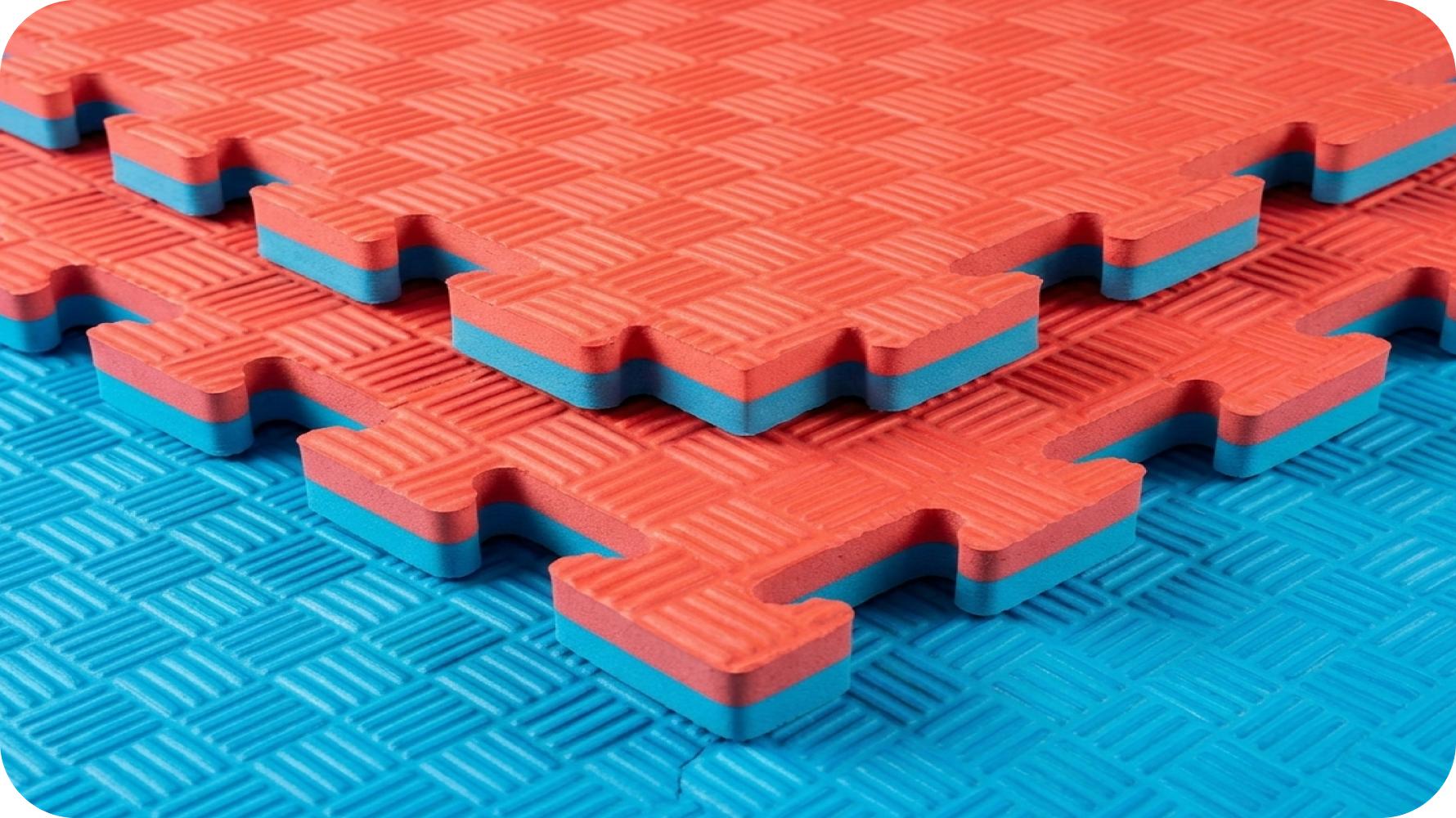
Budo mats. Interlocking foam mats. Tatami mats. Tatami dovetail. EVA mats. Puzzle mats.
These are all different names for the same flooring solution used in every modern free-roam VR arena. From here on, we'll just call them budo mats.
So why do we use them in our own VR arenas, and insist that our partners do the same?
Here's the thing: in free-roam VR games, your guests play without shoes. Offering replacement footwear doesn't solve the problem — dirt and dust still find their way in. You can't control how clean the shoes are that people arrive with.
Bare feet plus a soft floor gives players three things:
Leaving the floor bare isn't an option. During gameplay, players squat, kneel, and move fast. A hard, cold floor makes all of that painfully uncomfortable.
So what about carpet?
Carpets almost never pass fire safety regulations. And even if you get approval, it will get dirty sooner or later. When that happens, you have to replace the whole thing. You can't just cut out one square and drop in a new one. It's expensive and pointless.
Budo mats, on the other hand, come with a fire safety certificate. Plus, they're made of interlocking tiles. If one tile gets stained or damaged, you swap it out in seconds. That's also why we recommend using multiple colors — so swapped tiles don't stand out.
Minimum thickness for a VR arena? 1.2 cm (about 0.5 inches).
These are all different names for the same flooring solution used in every modern free-roam VR arena. From here on, we'll just call them budo mats.
So why do we use them in our own VR arenas, and insist that our partners do the same?
Here's the thing: in free-roam VR games, your guests play without shoes. Offering replacement footwear doesn't solve the problem — dirt and dust still find their way in. You can't control how clean the shoes are that people arrive with.
Bare feet plus a soft floor gives players three things:
- Safety
- Cleanliness
- Comfort
Leaving the floor bare isn't an option. During gameplay, players squat, kneel, and move fast. A hard, cold floor makes all of that painfully uncomfortable.
So what about carpet?
Carpets almost never pass fire safety regulations. And even if you get approval, it will get dirty sooner or later. When that happens, you have to replace the whole thing. You can't just cut out one square and drop in a new one. It's expensive and pointless.
Budo mats, on the other hand, come with a fire safety certificate. Plus, they're made of interlocking tiles. If one tile gets stained or damaged, you swap it out in seconds. That's also why we recommend using multiple colors — so swapped tiles don't stand out.
Minimum thickness for a VR arena? 1.2 cm (about 0.5 inches).
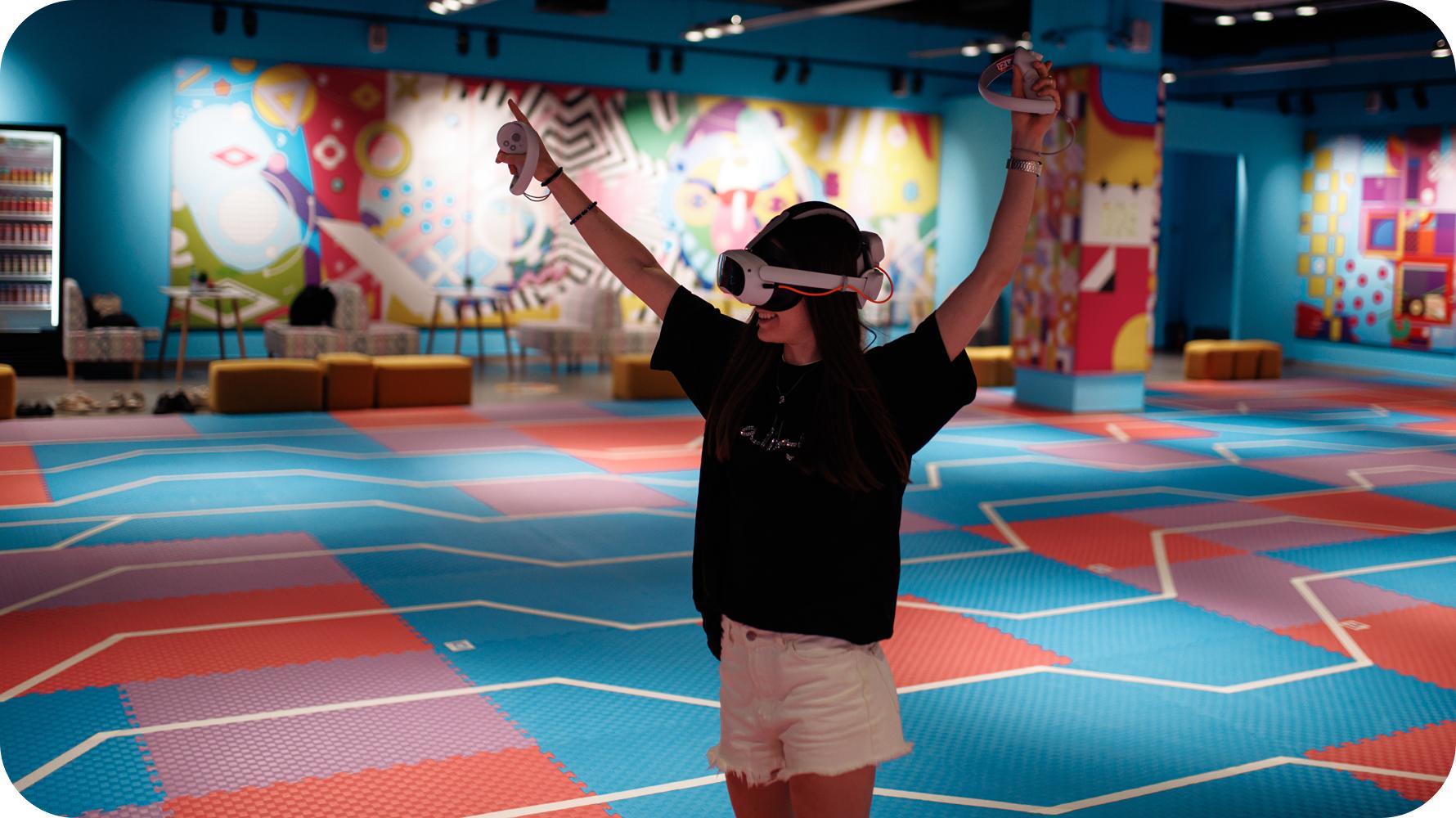
What are those white lines on the floor?
Ah, now that's a good question.
With older generation VR headsets, the devices needed extra visual cues to tell where the play area was. That's exactly what those white lines are for — a special floor marking system.
Depending on the surface, you can use self-adhesive tape, paint, or even plain masking tape. The key is to use a matte, non-reflective material. The recommended marking color is white.
That said, arena owners are free to choose their own pattern.
What about today's most advanced VR headsets?
Take the Meta Quest 3, for example. It lets guests fight freely and play BATTLE START missions on outdoor asphalt in bright sunlight, in complete darkness, and yes — on budo mats with no markings at all.
But we still recommend doing it anyway.
Hardware gets older. It slows down. Markings protect you from potential disorientation, and they're absolutely necessary if you plan to run our best VR games on hardware below the Quest 3 level.
Ah, now that's a good question.
With older generation VR headsets, the devices needed extra visual cues to tell where the play area was. That's exactly what those white lines are for — a special floor marking system.
Depending on the surface, you can use self-adhesive tape, paint, or even plain masking tape. The key is to use a matte, non-reflective material. The recommended marking color is white.
That said, arena owners are free to choose their own pattern.
What about today's most advanced VR headsets?
Take the Meta Quest 3, for example. It lets guests fight freely and play BATTLE START missions on outdoor asphalt in bright sunlight, in complete darkness, and yes — on budo mats with no markings at all.
But we still recommend doing it anyway.
Hardware gets older. It slows down. Markings protect you from potential disorientation, and they're absolutely necessary if you plan to run our best VR games on hardware below the Quest 3 level.
One right decision saves you from a hundred future problems
That's what years of real-world operation taught us. Get the floor right from day one, and you stop worrying. No stains you can't fix. No fire marshal headaches. No headsets losing track of the ground. Just clean, comfortable, non-stop action — round after round, guest after guest.

