
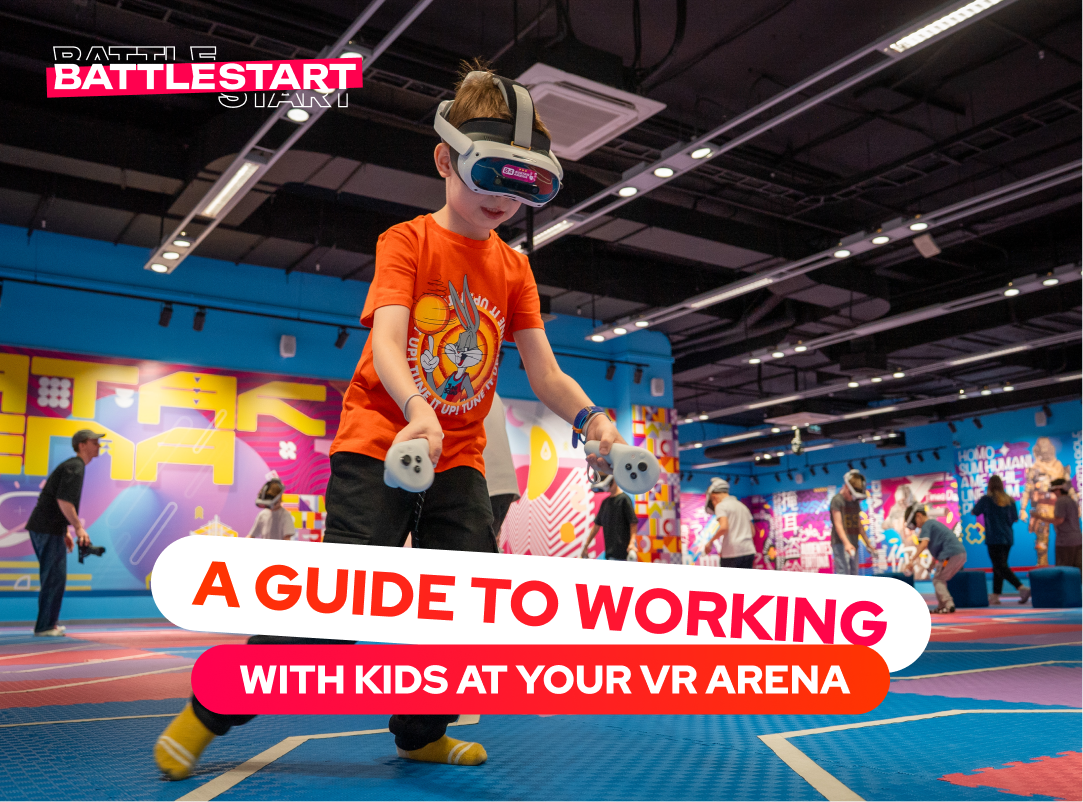
Running a free-roam VR arena is a VR business that, in part, turns you into a magician. You get to be the gatekeeper to other worlds. But when your audience includes children as young as five, the job becomes less about technology and more about psychology.
For a child, stepping into a VR arena isn’t just putting on a VR headset; it is a leap into a world that feels as real as the living room they left behind. For adults running these venues, it’s easy to forget that a child’s brain doesn’t process this experience the same way we do.
We spoke with partners who have successfully navigated the VR entertainment market and gained real experience working with kids to create a guide that helps you build the bridge between high-tech immersion and a child's imagination.
Here is how to keep them safe, happy, and coming back for more.
Read this yourself and train your team on it.
For a child, stepping into a VR arena isn’t just putting on a VR headset; it is a leap into a world that feels as real as the living room they left behind. For adults running these venues, it’s easy to forget that a child’s brain doesn’t process this experience the same way we do.
We spoke with partners who have successfully navigated the VR entertainment market and gained real experience working with kids to create a guide that helps you build the bridge between high-tech immersion and a child's imagination.
Here is how to keep them safe, happy, and coming back for more.
Read this yourself and train your team on it.
The Art of Speaking "Kid"
Adults often make the mistake of either talking to children like they are tiny adults or, conversely, using a condescending voice. Neither works in a high-stimulation environment like a VR arena. If you want to be heard and earn a child's trust, just speak to them simply and in a friendly manner. The second important detail is structured speech.
3 effective approaches:
1️⃣ Short commands, not paragraphs.
A child’s working memory is limited. Don't overwhelm them with too many details at once, or you'll scatter their attention.
2️⃣ Use their name if possible.
Personalization snaps them out of the chaos of the arena and focuses their attention.
3️⃣ The “Why” matters.
Children are more likely to follow safety rules if they understand the consequences.
3 effective approaches:
1️⃣ Short commands, not paragraphs.
A child’s working memory is limited. Don't overwhelm them with too many details at once, or you'll scatter their attention.
2️⃣ Use their name if possible.
Personalization snaps them out of the chaos of the arena and focuses their attention.
3️⃣ The “Why” matters.
Children are more likely to follow safety rules if they understand the consequences.
The Memory Trap: Repetition is Not Annoying, It’s Necessary
One of the biggest oversights staff make is assuming that because a child nodded enthusiastically during the safety briefing, the information stuck.
Spoiler: It didn’t.
The moment that headset goes on and a digital world appears, the child’s prefrontal cortex—the part of the brain responsible for impulse control and memory recall—effectively goes offline. They are operating on pure adrenaline.
Spoiler: It didn’t.
The moment that headset goes on and a digital world appears, the child’s prefrontal cortex—the part of the brain responsible for impulse control and memory recall—effectively goes offline. They are operating on pure adrenaline.
The solution is the “3-R” Rule: Repeat, Reinforce, and Re-check.
Repeat: State the boundary (e.g., “Remember, all the obstacles in the games are real! You can't walk through a tree, a wall, or a shelf! If you see the red grid — stop!”) at least three times in three different ways before the game starts.
Reinforce: A great way to reinforce the rules is to ask back. Right after the briefing, ask a short question like, "What do we do when we see the red grid?" If the kids don't answer or give the wrong answer, it means you'll need to explain it again.
Yes, this can be annoying and time-consuming. But it's better to spend an extra five minutes than to deal with a situation where a child has hurt themselves.
Re-check: Kids don't always complain when something feels off, and they're often afraid to say they don't understand something. Watch their behavior. If a child keeps running into walls, ignoring teammates, or standing still doing nothing, they're likely lost. Pause the game, crouch down, and quickly remind them what they need to do next.
Reinforce: A great way to reinforce the rules is to ask back. Right after the briefing, ask a short question like, "What do we do when we see the red grid?" If the kids don't answer or give the wrong answer, it means you'll need to explain it again.
Yes, this can be annoying and time-consuming. But it's better to spend an extra five minutes than to deal with a situation where a child has hurt themselves.
Re-check: Kids don't always complain when something feels off, and they're often afraid to say they don't understand something. Watch their behavior. If a child keeps running into walls, ignoring teammates, or standing still doing nothing, they're likely lost. Pause the game, crouch down, and quickly remind them what they need to do next.
Empathy Over Efficiency
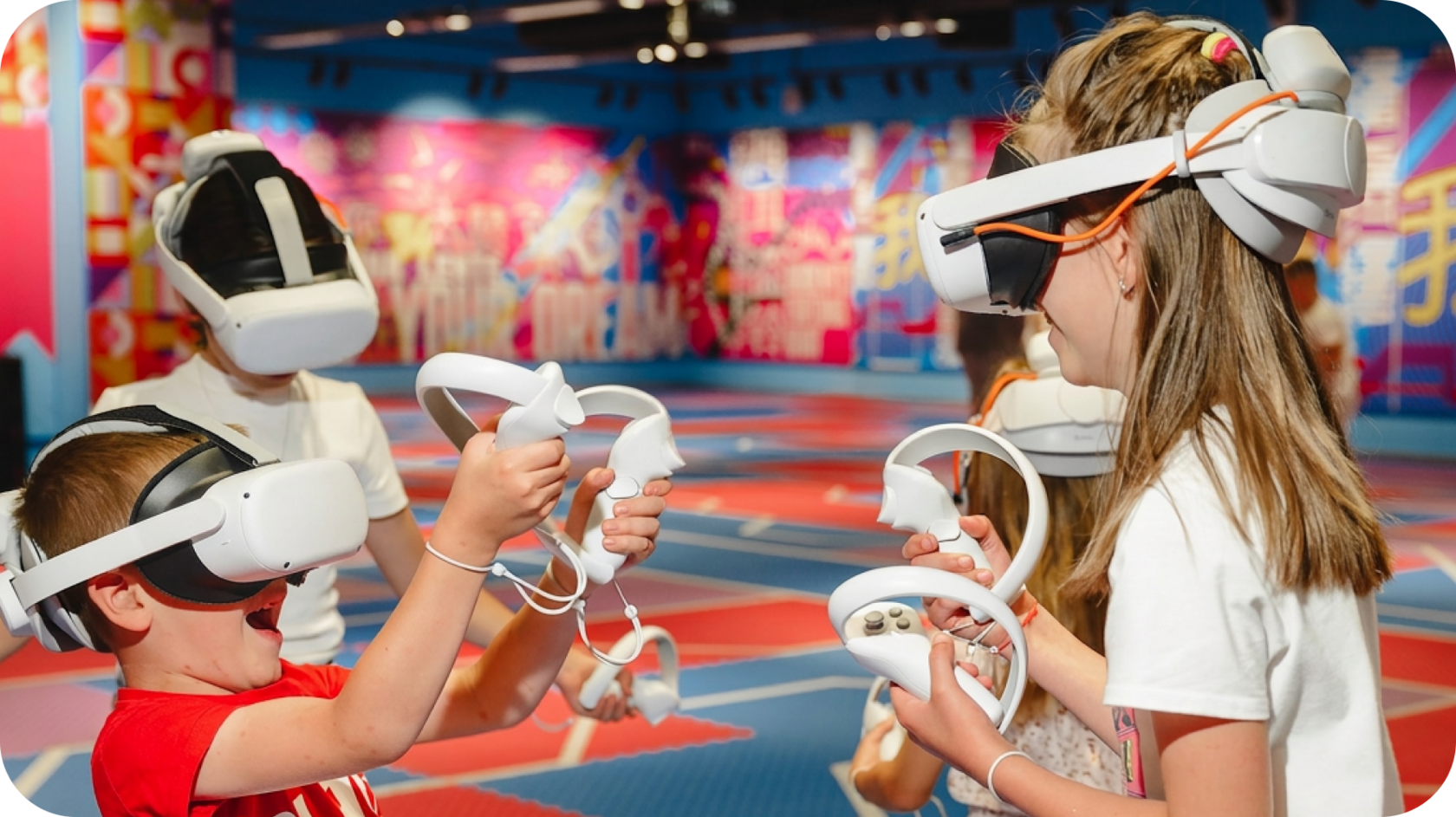
When you are an adult, putting on a VR headset is an easy transaction. For a child, it is a ritual. They can be nervous about the dark mask covering their face. They can be unsure about the weight. They might be terrified that the digital creatures are real.
If you rush a child into a VR headset to keep the schedule moving, you can spend twice as long dealing with a meltdown later.
The best staff members are those who squat down to meet the child’s eye level.
They let the child touch the headset and the controller before putting it on. They show them the screen so the child understands there is one inside.
If you rush a child into a VR headset to keep the schedule moving, you can spend twice as long dealing with a meltdown later.
The best staff members are those who squat down to meet the child’s eye level.
They let the child touch the headset and the controller before putting it on. They show them the screen so the child understands there is one inside.
You Are Their Real-World Guardian
As an arena owner, one of the most important things to emphasize when training your staff is this: they are responsible for the safety of every child during a VR session. Yes, they conduct briefings and explain the rules. But when it comes to kids, you always have to keep in mind that things can go sideways.
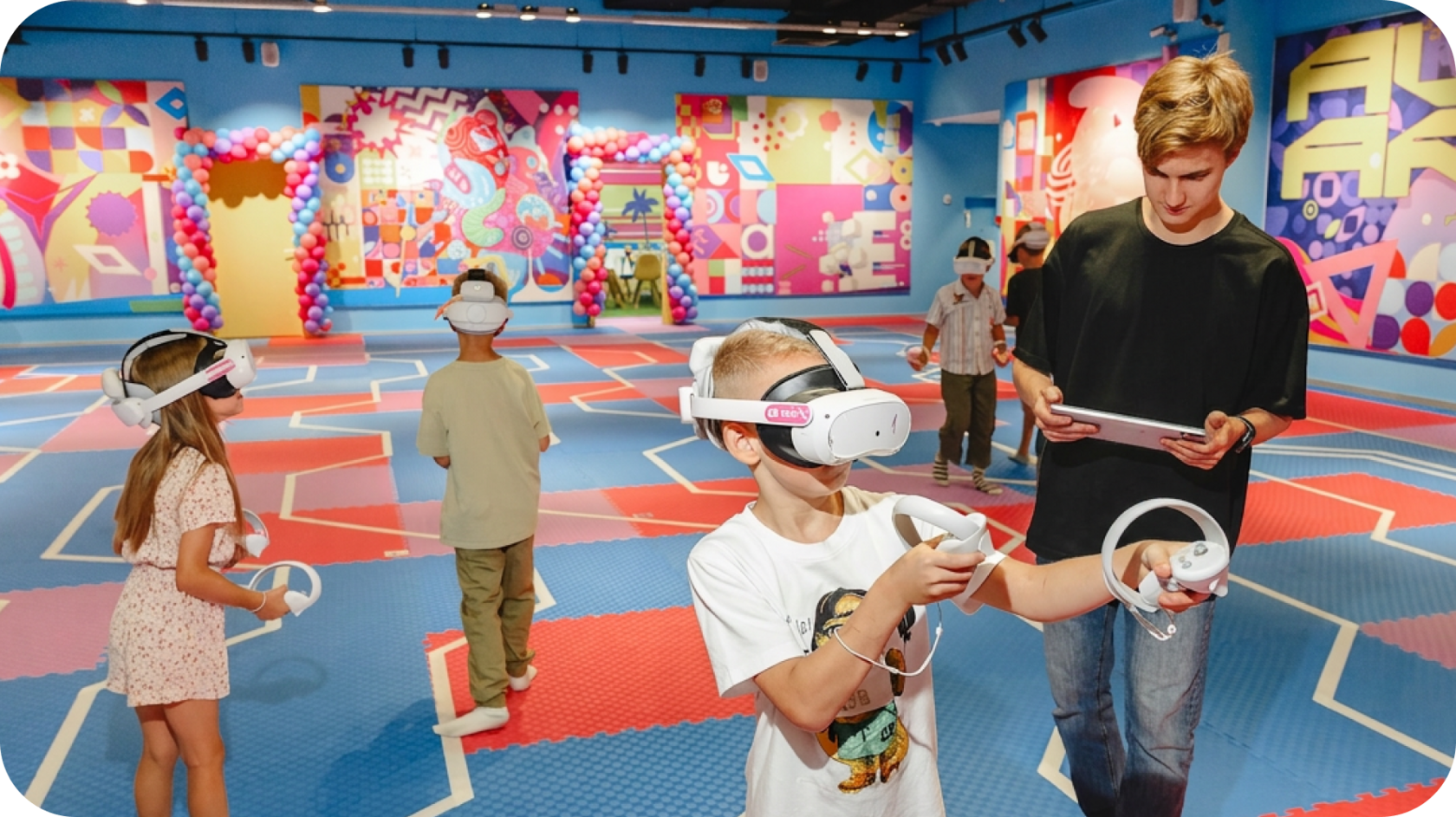
That's why one staff member must always be actively monitoring, both by watching the players directly in the real world and on the tablet in virtual reality. If something starts to go wrong, such as players arguing, running too fast, or someone being too scared, they need to react immediately. Sometimes a calm voice is enough to guide the children and get the situation back under control. Other times, pausing the game is the right move.
This level of attention might feel excessive. But parents bring their children to your VR arena trusting that nothing bad will happen. Meeting that trust and building a reputation not just as a fun place but a reliably safe one is a job that has to be done right, every single time.
That's why one staff member must always be actively monitoring, both by watching the players directly in the real world and on the tablet in virtual reality. If something starts to go wrong, such as players arguing, running too fast, or someone being too scared, they need to react immediately. Sometimes a calm voice is enough to guide the children and get the situation back under control. Other times, pausing the game is the right move.
This level of attention might feel excessive. But parents bring their children to your VR arena trusting that nothing bad will happen. Meeting that trust and building a reputation not just as a fun place but a reliably safe one is a job that has to be done right, every single time.
Conflict Resolution on the Battlefield
A VR arena is the perfect place for an unforgettable birthday party or family celebration. But the combination of kids, excitement, competition, and adrenaline can sometimes lead to conflicts on the game field. It's great if your staff can stop an argument the moment it starts. But that doesn't always happen. That's why it's critical to train your team in conflict resolution techniques. That way, a celebration never turns into a showdown between your little guests.
So when arguments about tactics, who shot whom, or who had the better weapon start to escalate into tears or even fights, follow these steps:
1️⃣ Headsets off
It's psychologically easier for a child to get physically aggressive when they're facing an avatar instead of their actual friend. Pause the game, have the arguers remove the headsets, and bring them to a neutral corner.
2️⃣ Validate the feeling, not the action
A child screaming "He's cheating!" is looking for validation. They're feeling frustrated, powerless, or embarrassed about losing. Instead of saying "No, he's not" or launching into a technical explanation of how the game works, start by acknowledging the emotion: "I understand that you're upset. Now we will figure out how to solve the problem."
3️⃣ Let each child explain without interruption
Ask open questions: "What happened from your side?" Often, even during the discussion, children realize that there was a simple misunderstanding in which no one wanted to offend anyone.
4️⃣ Let them co-create the solution
Instead of focusing on who was right or wrong, redirect: "Okay, let's figure out how we can have fun for the rest of the session. Should we try a co-op mission instead, or do you want to keep playing but agree on one rule, like not shooting at each other?"
So when arguments about tactics, who shot whom, or who had the better weapon start to escalate into tears or even fights, follow these steps:
1️⃣ Headsets off
It's psychologically easier for a child to get physically aggressive when they're facing an avatar instead of their actual friend. Pause the game, have the arguers remove the headsets, and bring them to a neutral corner.
2️⃣ Validate the feeling, not the action
A child screaming "He's cheating!" is looking for validation. They're feeling frustrated, powerless, or embarrassed about losing. Instead of saying "No, he's not" or launching into a technical explanation of how the game works, start by acknowledging the emotion: "I understand that you're upset. Now we will figure out how to solve the problem."
3️⃣ Let each child explain without interruption
Ask open questions: "What happened from your side?" Often, even during the discussion, children realize that there was a simple misunderstanding in which no one wanted to offend anyone.
4️⃣ Let them co-create the solution
Instead of focusing on who was right or wrong, redirect: "Okay, let's figure out how we can have fun for the rest of the session. Should we try a co-op mission instead, or do you want to keep playing but agree on one rule, like not shooting at each other?"
When Things Go Further: Handling Serious Incidents
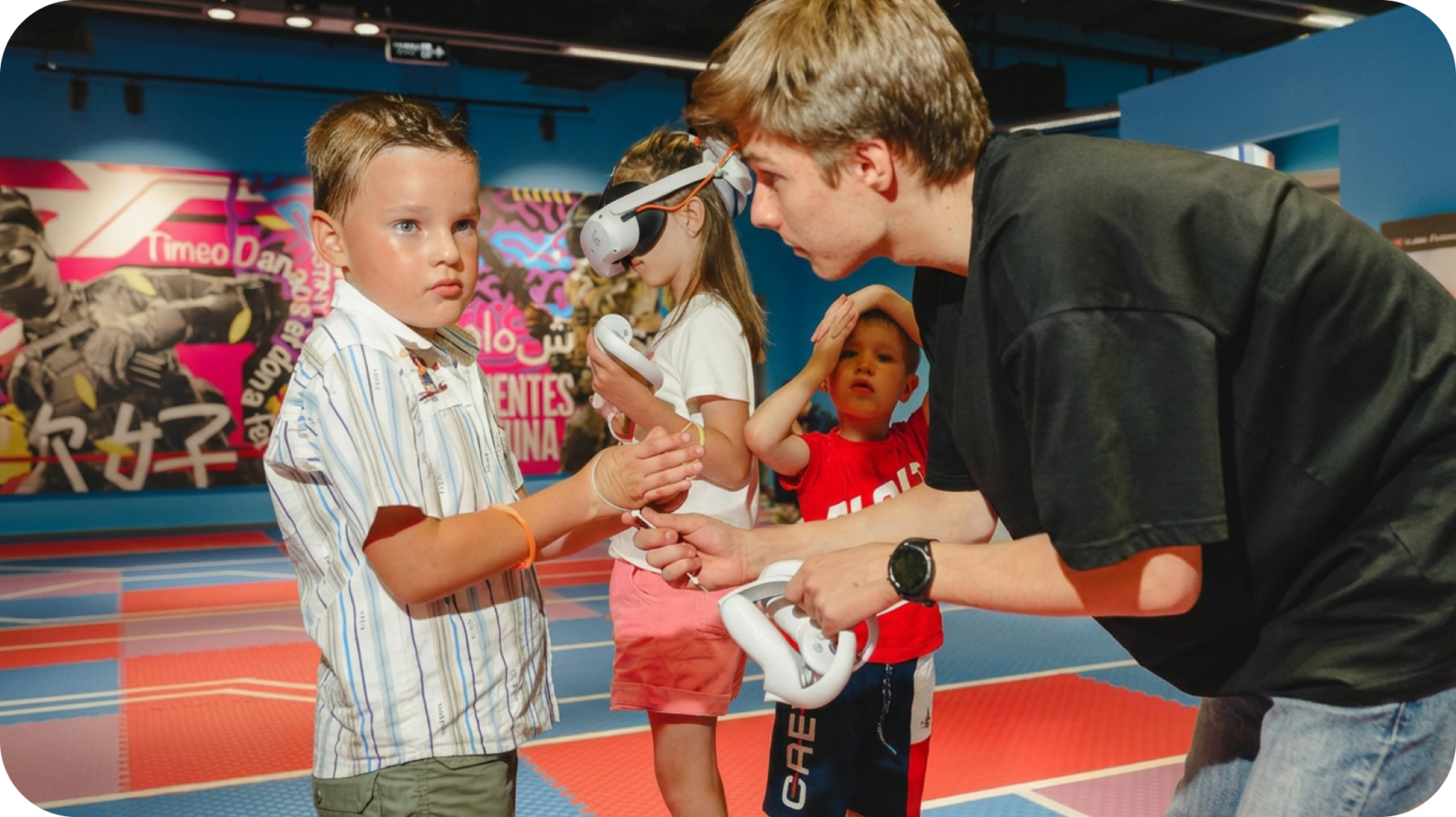
If a child breaks equipment, there's no point in scolding them. Especially if their parents or the other adults they came with aren't nearby. Speak with whoever is responsible for the young guest. Pull the accompanying adult aside and speak calmly.
Yes, it can be extremely difficult, especially when parents are shouting, refuse to take responsibility, or don't want to pay for the damage. But it's critically important for your staff not to give them any reason to accuse your team of incompetence. A logical way to handle this situation is to show the camera footage as evidence.
We sincerely hope you never have to deal with this, but it's better to plan out a course of action for such situations in advance. That way, your staff won't have to make decisions in a panic or under pressure from upset parents.
Yes, it can be extremely difficult, especially when parents are shouting, refuse to take responsibility, or don't want to pay for the damage. But it's critically important for your staff not to give them any reason to accuse your team of incompetence. A logical way to handle this situation is to show the camera footage as evidence.
We sincerely hope you never have to deal with this, but it's better to plan out a course of action for such situations in advance. That way, your staff won't have to make decisions in a panic or under pressure from upset parents.
It's Tough, But You've Got This
Working with kids is undoubtedly one of the toughest jobs and requires the most focus and dedication from everyone. But trust us, it's worth it.
From a business perspective, family entertainment is the most profitable niche.
We've proven this at our own VR arenas, and so have our many partners across the globe.
They made it work and became successful. Which means you will too. The key is choosing the right VR franchise. And you already know which one!
From a business perspective, family entertainment is the most profitable niche.
We've proven this at our own VR arenas, and so have our many partners across the globe.
They made it work and became successful. Which means you will too. The key is choosing the right VR franchise. And you already know which one!

