
We don’t usually kick off our articles with a video, but on this topic, it feels more than appropriate.
A quick preview:
So, you’ve decided to launch your own VR arena (hopefully, in partnership with BATTLE START). On our side, you get:
— Access to the best free-roam VR games we develop
— Support across the board (marketing, SMM, tech support)
On your side, you need to:
— Find and renovate a venue
— Purchase and set up the equipment
— Hire the staff
And here’s that video we promised, which walks you through exactly who you need on your team:
A quick preview:
So, you’ve decided to launch your own VR arena (hopefully, in partnership with BATTLE START). On our side, you get:
— Access to the best free-roam VR games we develop
— Support across the board (marketing, SMM, tech support)
On your side, you need to:
— Find and renovate a venue
— Purchase and set up the equipment
— Hire the staff
And here’s that video we promised, which walks you through exactly who you need on your team:
Let’s assume you’ve done everything right and put together a great crew. But that’s where the work with your team begins, not ends.
One and the same arena, all other things being equal, can either stay steadily in the black or slide into the red. And the difference comes down to one thing: your employees. They can be as brilliant as they come, but they’re not going to give 100% for someone else’s business.
What will help you and them? The answer is a well-structured motivation system.
One and the same arena, all other things being equal, can either stay steadily in the black or slide into the red. And the difference comes down to one thing: your employees. They can be as brilliant as they come, but they’re not going to give 100% for someone else’s business.
What will help you and them? The answer is a well-structured motivation system.
George, take it away!
You might remember one of our partners. His name is George, and he owns a European network of VR clubs.
George comes with a solid background in various fields, including marketing and sales, and that definitely helps his arenas consistently rank among the top earners. That’s why we turned to him for advice.
The employee management framework he shared with us is absolutely going to be useful to you.
Everything you’ll read below is based on George’s words and his years of proven success.
The employee management framework he shared with us is absolutely going to be useful to you.
Everything you’ll read below is based on George’s words and his years of proven success.
Motivation as a Sales Driver
You might think that simply being a strict boss—or, on the flip side, a friendly one—is enough to keep your team running like clockwork. But that idea tends to crash headfirst into reality pretty quickly.
You need to design and build employee motivation so that it becomes one of your core tools. To do that, it must be:
— Laid out from start to finish
— Communicated clearly to every employee
— Consistently applied to all staff, without exception, every single time
Motivation needs to include both positive and negative elements. Using just one or the other simply doesn’t work. Why? It’s pretty straightforward.
The human mind is highly adaptive. Employees get used to bonuses without any downside just as fast as they stop being scared by penalties alone—if there’s no positive reinforcement. So you need to work both sides of the street.
You need to design and build employee motivation so that it becomes one of your core tools. To do that, it must be:
— Laid out from start to finish
— Communicated clearly to every employee
— Consistently applied to all staff, without exception, every single time
Motivation needs to include both positive and negative elements. Using just one or the other simply doesn’t work. Why? It’s pretty straightforward.
The human mind is highly adaptive. Employees get used to bonuses without any downside just as fast as they stop being scared by penalties alone—if there’s no positive reinforcement. So you need to work both sides of the street.

✅ What positive motivation does George use?
✔️ Financial Motivation:
1️⃣ Bonuses/gifts – anything tangible you can buy or give your staff
2️⃣ Moving up the ladder = higher pay
Since George runs a network of large VR clubs, he has several tiers of staff: junior admin, senior admin, and manager. Moving from one level to the next happens after passing exams.
The incentive is clear: be the best, grow, and earn a higher base salary plus bonuses. Simple as that.
How George calculates bonuses:
For managers: If the VR arena earns above its break-even point for the month, the admin gets 5% of everything above that amount. So if the break-even point is $1,000 and the arena pulls in, say, $5,000, the bonus is calculated on that extra $4,000.
For senior admins: The calculation is based on daily earnings. If the arena earns more than a set threshold during that admin's shift (George defines this number clearly in advance), the admin gets 5% of whatever is above that goal. For instance, if the daily target was $100 and the arena actually earned $500, the bonus comes from the $400 above the plan.
For junior admins: It’s the same setup as senior admins, but the bonus is 4% of revenue over the plan.
✔️ Financial Motivation:
1️⃣ Bonuses/gifts – anything tangible you can buy or give your staff
2️⃣ Moving up the ladder = higher pay
Since George runs a network of large VR clubs, he has several tiers of staff: junior admin, senior admin, and manager. Moving from one level to the next happens after passing exams.
The incentive is clear: be the best, grow, and earn a higher base salary plus bonuses. Simple as that.
How George calculates bonuses:
For managers: If the VR arena earns above its break-even point for the month, the admin gets 5% of everything above that amount. So if the break-even point is $1,000 and the arena pulls in, say, $5,000, the bonus is calculated on that extra $4,000.
For senior admins: The calculation is based on daily earnings. If the arena earns more than a set threshold during that admin's shift (George defines this number clearly in advance), the admin gets 5% of whatever is above that goal. For instance, if the daily target was $100 and the arena actually earned $500, the bonus comes from the $400 above the plan.
For junior admins: It’s the same setup as senior admins, but the bonus is 4% of revenue over the plan.
✔️ Non-Financial Motivation:
1️⃣ Extra comfort and loyalty perks
Did an employee exceed their sales plan? Do something helpful for the team? Officially let them come in later or leave earlier on a given day—with their pay intact, of course.
How it works at George’s arenas:
He sets a team challenge: after every event held at his arena, guests should post stories to their social media. Word of mouth is the most effective advertising, so this really matters.
It has to be a voluntary choice by the customers, but making them want to freely promote and talk about the VR arena—that's the job of your staff.
George’s system:
For every 30 guest stories posted per week, employees can leave one hour early on any day.
If they hit 50 stories per week, they can also come in one hour late one day.
Fifty stories a week, at a conservative estimate, reaches 5,000 people who are relevant to your business. Opening an hour late and closing an hour early once a week, letting your team recharge—that’s totally worth it.
1️⃣ Extra comfort and loyalty perks
Did an employee exceed their sales plan? Do something helpful for the team? Officially let them come in later or leave earlier on a given day—with their pay intact, of course.
How it works at George’s arenas:
He sets a team challenge: after every event held at his arena, guests should post stories to their social media. Word of mouth is the most effective advertising, so this really matters.
It has to be a voluntary choice by the customers, but making them want to freely promote and talk about the VR arena—that's the job of your staff.
George’s system:
For every 30 guest stories posted per week, employees can leave one hour early on any day.
If they hit 50 stories per week, they can also come in one hour late one day.
Fifty stories a week, at a conservative estimate, reaches 5,000 people who are relevant to your business. Opening an hour late and closing an hour early once a week, letting your team recharge—that’s totally worth it.
2️⃣ Merch
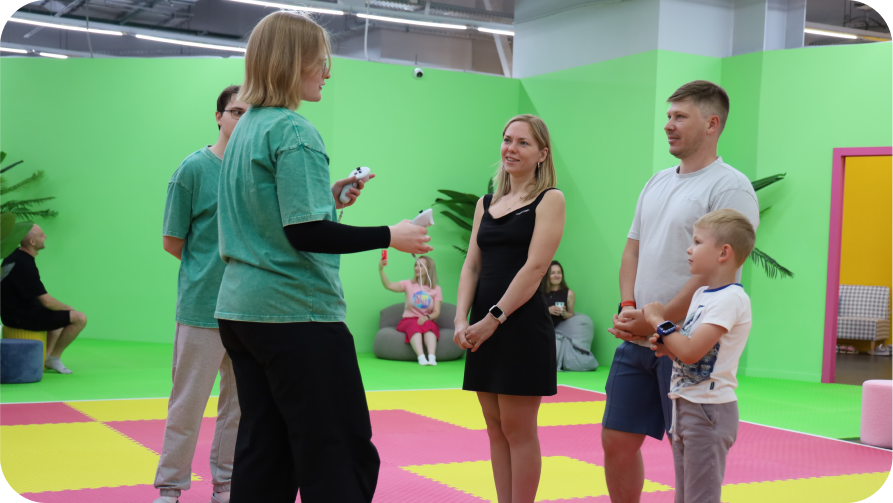
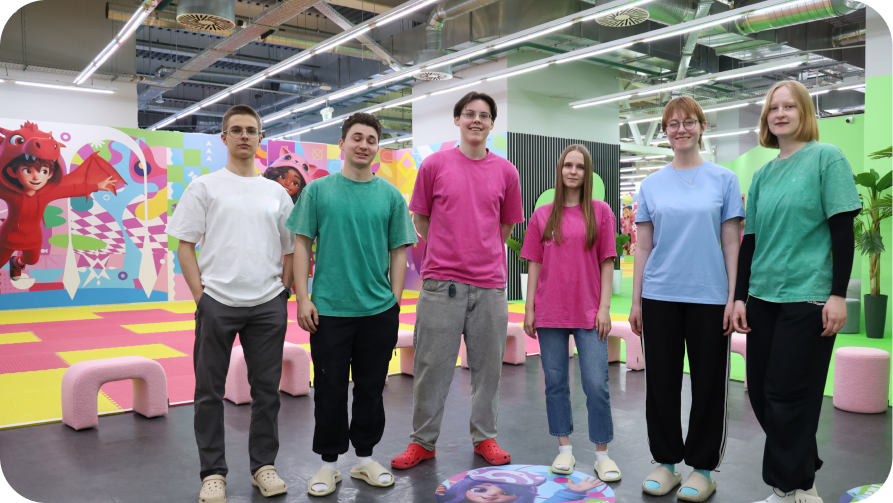
This one’s pure psychology. Different employees wear different colored T-shirts. It’s an effective way to foster mutual respect. It doesn’t matter which colors you pick—the key is that they reflect the hierarchy. The people working at your arenas are not introverts; they want to stand out and be noticed. Give them that opportunity as a perk.
This one’s pure psychology. Different employees wear different colored T-shirts. It’s an effective way to foster mutual respect. It doesn’t matter which colors you pick—the key is that they reflect the hierarchy. The people working at your arenas are not introverts; they want to stand out and be noticed. Give them that opportunity as a perk.
✔️ Combined Motivation:
This approach works best if you have more than two VR arenas.
Your main tool here is team chats. When compiling your weekly reports (George does his on Mondays), identify which arena brought in the most revenue. Then, using AI or whatever creative method you like, make a certificate or a fun, humorous image that highlights the winning team.
You might think this is a waste of time, but don’t jump to conclusions. Never underestimate the power of competition and the desire to be recognized as the best.
☑️ What negative motivation does George use?
George almost never uses fines as a negative motivator.
Withholding bonuses is only applied to managers, and only in cases of complete failure to carry out direct tasks assigned by the owner—which, as you might guess, happens extremely rarely.
What’s included in his softer, non-financial negative motivation?
✔️ Instead of docking someone’s pay, turn the "punishment" into something that actually benefits your business. For instance, you could have the employee spend time handing out flyers near the arena.
✔️ A conversation with the owner, offering a reasoned explanation of where the employee went wrong, also works well. The key is that the communication is free of negativity and respects the person’s dignity. Just constructive feedback.
This approach works best if you have more than two VR arenas.
Your main tool here is team chats. When compiling your weekly reports (George does his on Mondays), identify which arena brought in the most revenue. Then, using AI or whatever creative method you like, make a certificate or a fun, humorous image that highlights the winning team.
You might think this is a waste of time, but don’t jump to conclusions. Never underestimate the power of competition and the desire to be recognized as the best.
☑️ What negative motivation does George use?
George almost never uses fines as a negative motivator.
Withholding bonuses is only applied to managers, and only in cases of complete failure to carry out direct tasks assigned by the owner—which, as you might guess, happens extremely rarely.
What’s included in his softer, non-financial negative motivation?
✔️ Instead of docking someone’s pay, turn the "punishment" into something that actually benefits your business. For instance, you could have the employee spend time handing out flyers near the arena.
✔️ A conversation with the owner, offering a reasoned explanation of where the employee went wrong, also works well. The key is that the communication is free of negativity and respects the person’s dignity. Just constructive feedback.
✅☑️ The Big Competition as a separate motivator
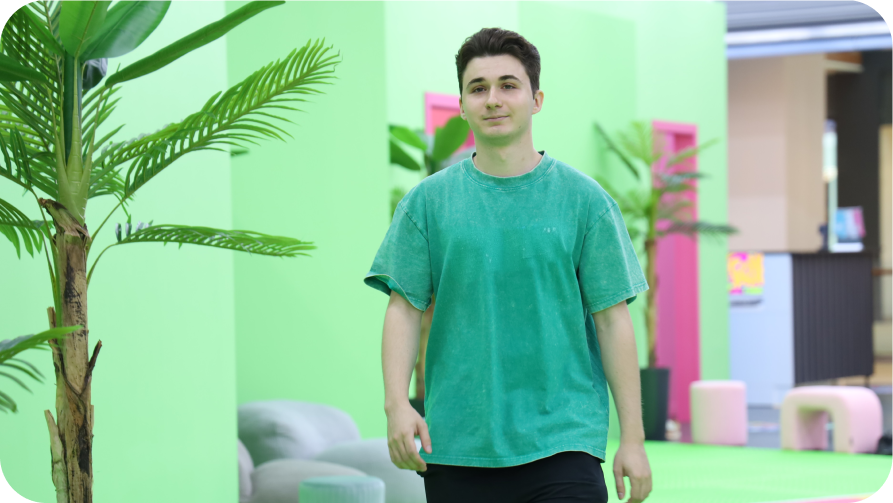
Remember, George has a network of VR clubs across different cities. And these branches compete with each other. Every month, when results are tallied, the winner is the arena that earned the most revenue. The winners get an extra fixed bonus, split equally among the team, and they also earn the right to come up with a playful punishment for the losing team. Completing this task is filmed and posted in the work chat.
Important: the punishments should never be humiliating. Everyone should have a good laugh.
Remember, George has a network of VR clubs across different cities. And these branches compete with each other. Every month, when results are tallied, the winner is the arena that earned the most revenue. The winners get an extra fixed bonus, split equally among the team, and they also earn the right to come up with a playful punishment for the losing team. Completing this task is filmed and posted in the work chat.
Important: the punishments should never be humiliating. Everyone should have a good laugh.
Found Your Approach? Track Its Effectiveness and Evolve Over Time
This system only works as long as it’s effective. Remember what we said at the start about human adaptability?
Keep your finger on the pulse and analyze the return you're getting from your motivational schemes. Gather feedback from employees at all levels—don’t wall yourself off from them, and don’t delegate this task entirely to your manager. After all, they might not tell you about certain issues.
Make yourself accessible to your staff. Don’t skimp on the time it takes to get all these processes right, and the positive results will follow.
Best of luck managing your VR arena! Still have questions? Pass them on to your BATTLE START manager, and we’ll do our best to bring you even more useful content to help make your VR business an even bigger success.
Keep your finger on the pulse and analyze the return you're getting from your motivational schemes. Gather feedback from employees at all levels—don’t wall yourself off from them, and don’t delegate this task entirely to your manager. After all, they might not tell you about certain issues.
Make yourself accessible to your staff. Don’t skimp on the time it takes to get all these processes right, and the positive results will follow.
Best of luck managing your VR arena! Still have questions? Pass them on to your BATTLE START manager, and we’ll do our best to bring you even more useful content to help make your VR business an even bigger success.

