
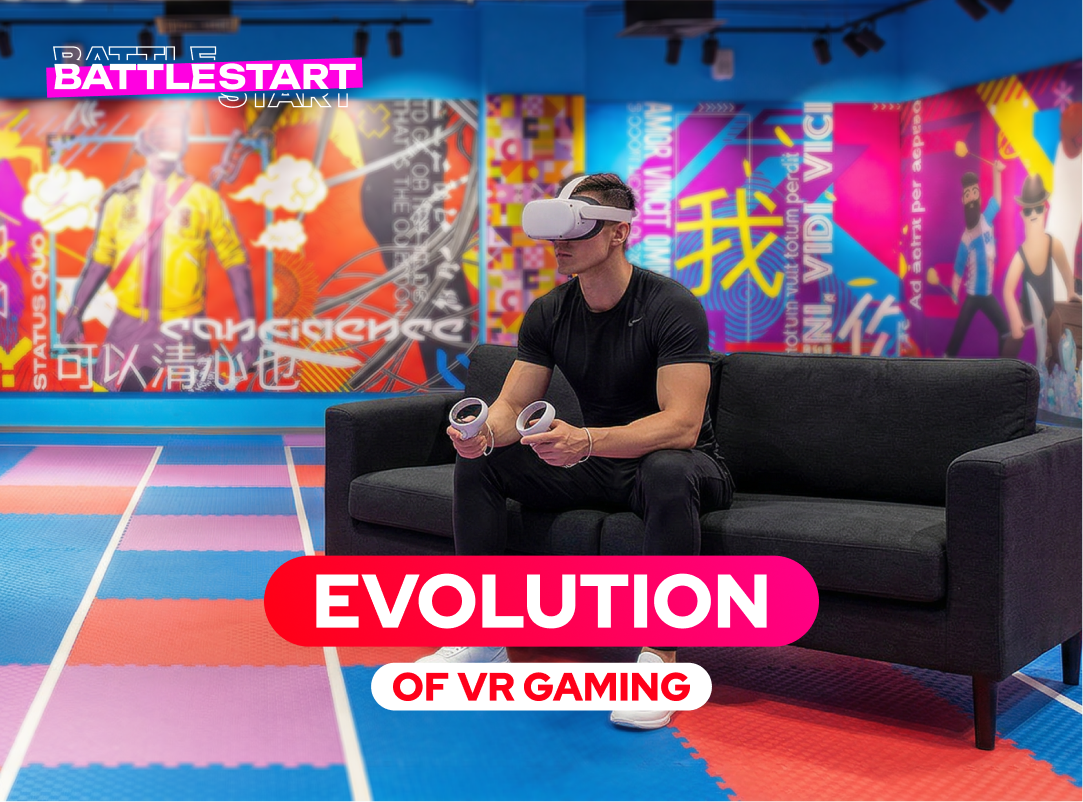
The dream of stepping inside a video game is as old as video games themselves. For decades, it was confined to science fiction, then to bulky, expensive prototypes, and eventually to living rooms cluttered with cables connecting a powerful PC to a headset that isolated the player from the world.
Today, that dream has evolved into something far more social, physical, and spectacular: free-roam VR arenas. This transformation—from isolated, seated experiences to shared, boundless adventures—is a story of relentless technological progress.
And at the forefront of this new frontier stands BATTLE START, a company that has not only mastered the art of free-roam game development but is now leading the charge into new and diverse formats, including the emerging world of Mobile Mixed Reality (MR) Arenas.
Today, that dream has evolved into something far more social, physical, and spectacular: free-roam VR arenas. This transformation—from isolated, seated experiences to shared, boundless adventures—is a story of relentless technological progress.
And at the forefront of this new frontier stands BATTLE START, a company that has not only mastered the art of free-roam game development but is now leading the charge into new and diverse formats, including the emerging world of Mobile Mixed Reality (MR) Arenas.
The Tethered Revolution: VR Finds Its Feet
The modern era of virtual reality was ignited in 2012 by a Kickstarter campaign for the Oculus Rift CV1. This sparked a technological arms race that culminated in 2016, a year often hailed as the "Year of VR." This first generation of consumer VR was defined by a clear, necessary compromise: raw power came at the cost of freedom.
Headsets like the Oculus Rift and HTC Vive were marvels of engineering. The HTC Vive, with its "lighthouse" tracking system, allowed users to walk around a room-scale space for the first time. Gamers could dodge bullets in Space Pirate Trainer or marvel at the intricate machinery of Job Simulator. However, this immersion was physically tethered. A thick cable connected the headset to a gaming PC, anchoring the player to a small, pre-defined area and creating a constant, subtle reminder of the real world. The experience was immersive, but it was also isolating. You were in the virtual world, but you were alone in a room.
Alongside these high-end systems, a parallel track of mobile VR emerged with devices like the Samsung Gear VR and Google Cardboard. These made VR accessible and portable by using a smartphone as the brain and screen. But they offered a pale imitation of the real thing, with limited graphical fidelity and no positional tracking.
For several years, the industry was stuck in this paradigm. The hardware was getting better, the libraries were growing with hits like Beat Saber and Superhot VR, but the "killer app" that would drive mass adoption remained elusive.
That changed in 2020 with the release of Half-Life: Alyx, a full-length, AAA-quality game that demonstrated the narrative and interactive potential of VR. Yet, even this masterpiece couldn't solve the fundamental limitation of the medium: you were still tethered to a PC and confined to a small virtual box in your living room.
Headsets like the Oculus Rift and HTC Vive were marvels of engineering. The HTC Vive, with its "lighthouse" tracking system, allowed users to walk around a room-scale space for the first time. Gamers could dodge bullets in Space Pirate Trainer or marvel at the intricate machinery of Job Simulator. However, this immersion was physically tethered. A thick cable connected the headset to a gaming PC, anchoring the player to a small, pre-defined area and creating a constant, subtle reminder of the real world. The experience was immersive, but it was also isolating. You were in the virtual world, but you were alone in a room.
Alongside these high-end systems, a parallel track of mobile VR emerged with devices like the Samsung Gear VR and Google Cardboard. These made VR accessible and portable by using a smartphone as the brain and screen. But they offered a pale imitation of the real thing, with limited graphical fidelity and no positional tracking.
For several years, the industry was stuck in this paradigm. The hardware was getting better, the libraries were growing with hits like Beat Saber and Superhot VR, but the "killer app" that would drive mass adoption remained elusive.
That changed in 2020 with the release of Half-Life: Alyx, a full-length, AAA-quality game that demonstrated the narrative and interactive potential of VR. Yet, even this masterpiece couldn't solve the fundamental limitation of the medium: you were still tethered to a PC and confined to a small virtual box in your living room.
The Untethered Leap: Freedom in a VR Headset
The true paradigm shift came with the maturation of standalone VR headsets. The release of the Oculus Quest in 2019 proved that a powerful, wire-free VR experience was possible. By integrating all the processing power, tracking sensors, and displays into the headset itself, it cut the cord for good. This technology, powered by Qualcomm's Snapdragon chips, evolved rapidly. Inside-out tracking, using cameras on the headset to map the environment, became incredibly accurate, freeing users from needing external sensors.
This untethered leap was the technological seed for a new kind of VR entertainment. If the headset didn't need a PC, and it could track its position in a large space, why limit the player to a 10x10 foot living room? This question gave birth to the free-roam VR arena.
This untethered leap was the technological seed for a new kind of VR entertainment. If the headset didn't need a PC, and it could track its position in a large space, why limit the player to a 10x10 foot living room? This question gave birth to the free-roam VR arena.
The Arena is Born: From Backpacks to All-in-One
The concept of free-roam VR isn't new. The first such large-scale, multiplayer VR experiences began appearing as early as 2016. However, those initial solutions were uncomfortable and expensive. Players had to wear heavy backpacks containing gaming PCs, and the systems relied on proprietary tracking cameras mounted on the walls. It was a proof of concept, a spectacular glimpse into the future, but it was a complex and costly endeavor.
The technology has since been democratized. The advent of powerful standalone headsets with robust inside-out tracking, combined with high-speed WiFi 6, has made free-roam VR more accessible and reliable than ever. This shift from "backpack PCs" to "all-in-one" headsets like the Pico 4 and Meta Quest 3 has been crucial. It simplifies the setup, reduces maintenance, and makes the player experience more comfortable.
However, building a successful free-roam VR arena is about far more than just putting headsets on players in an empty room. The true challenge—and the area where companies like BATTLE START have distinguished themselves—lies in the software.
The technology has since been democratized. The advent of powerful standalone headsets with robust inside-out tracking, combined with high-speed WiFi 6, has made free-roam VR more accessible and reliable than ever. This shift from "backpack PCs" to "all-in-one" headsets like the Pico 4 and Meta Quest 3 has been crucial. It simplifies the setup, reduces maintenance, and makes the player experience more comfortable.
However, building a successful free-roam VR arena is about far more than just putting headsets on players in an empty room. The true challenge—and the area where companies like BATTLE START have distinguished themselves—lies in the software.
BATTLE START: Architect of the Free-Roam World
While hardware companies provide the tools, BATTLE START builds the worlds, along with the foundational software that ensures those worlds are safe and immersive. As a global player with a presence in almost 500 VR arenas across 40+ countries, BATTLE START has established itself as a key architect of the free-roam experience.
The most complex engineering challenge in free-roam VR isn't just making a game fun; it's making the physical and virtual spaces align perfectly and safely. In a home environment, the headset's guardian system creates a simple boundary. In a free-roam arena, multiple players must share a single, large virtual map that is a perfect digital twin of the physical play area, complete with real-world obstacles like pillars, walls, or level changes.
This is where BATTLE START's proprietary software expertise becomes critical. We have developed a Map Generator—an integration tool that allows arena operators to "bake" the exact physical configuration of their space into every game session, ensuring obstacles appear as solid, in-game obstacles that players will naturally avoid. It prevents players from running into real walls and turns the limitations of a physical space into part of the game environment, rather than a hazard.
The most complex engineering challenge in free-roam VR isn't just making a game fun; it's making the physical and virtual spaces align perfectly and safely. In a home environment, the headset's guardian system creates a simple boundary. In a free-roam arena, multiple players must share a single, large virtual map that is a perfect digital twin of the physical play area, complete with real-world obstacles like pillars, walls, or level changes.
This is where BATTLE START's proprietary software expertise becomes critical. We have developed a Map Generator—an integration tool that allows arena operators to "bake" the exact physical configuration of their space into every game session, ensuring obstacles appear as solid, in-game obstacles that players will naturally avoid. It prevents players from running into real walls and turns the limitations of a physical space into part of the game environment, rather than a hazard.
The Road Ahead: A Future of Diverse Realities
The evolution from a single player in a headset tethered to a PC, to 20 people running and laughing together, represents a fundamental shift in what VR can be. The hardware has evolved from a solitary peripheral into a platform for shared, physical adventure.
Today, the industry is defined by two parallel paths, each with its own unique strength.
On one hand, fully immersive Virtual Reality (VR) remains the undisputed champion of total escapism. Its superpower is the ability to transport players to entirely new worlds—whether that's an alien planet, a fantasy castle, or a zombie-infested casino. For the classic free-roam arena experience, where the goal is to forget you are in your home town and believe you are somewhere else entirely, VR is and will remain the gold standard.
On the other hand, Mixed Reality (MR) offers a fundamentally different value proposition. Its superpower is not escapism, but integration. By blending digital objects with the real world via full-color passthrough cameras, MR keeps players grounded in their physical environment. You can see your friends' faces, navigate around real pillars, and interact with virtual creatures that appear to inhabit your actual space.
MR and VR are two powerful branches of the same technological tree, each suited for different purposes. Virtual Reality is the portal to another dimension; Mixed Reality is the magical window that transforms the world around you.
Today, the industry is defined by two parallel paths, each with its own unique strength.
On one hand, fully immersive Virtual Reality (VR) remains the undisputed champion of total escapism. Its superpower is the ability to transport players to entirely new worlds—whether that's an alien planet, a fantasy castle, or a zombie-infested casino. For the classic free-roam arena experience, where the goal is to forget you are in your home town and believe you are somewhere else entirely, VR is and will remain the gold standard.
On the other hand, Mixed Reality (MR) offers a fundamentally different value proposition. Its superpower is not escapism, but integration. By blending digital objects with the real world via full-color passthrough cameras, MR keeps players grounded in their physical environment. You can see your friends' faces, navigate around real pillars, and interact with virtual creatures that appear to inhabit your actual space.
MR and VR are two powerful branches of the same technological tree, each suited for different purposes. Virtual Reality is the portal to another dimension; Mixed Reality is the magical window that transforms the world around you.
By Mastering Both Dimensions
True to its innovative spirit, BATTLE START is not betting on one future over the other—it is mastering both. Our company continues to develop blockbuster, fully immersive VR titles for its network of arenas. At the same time, recognizing the unique potential of mixed reality as a parallel opportunity, BATTLE START has positioned itself at the forefront of this emerging field.
For example, BATTLE START has pioneered the Mobile MR Arena format. This innovative business model is a new, flexible tool for entrepreneurs. It is a turnkey solution that allows our partners to bring mixed reality entertainment to locations where a permanent VR arena would be impossible—at outdoor events, weddings, and festivals. It lowers the barrier to entry for partners and brings cutting-edge entertainment directly to the public.
For example, BATTLE START has pioneered the Mobile MR Arena format. This innovative business model is a new, flexible tool for entrepreneurs. It is a turnkey solution that allows our partners to bring mixed reality entertainment to locations where a permanent VR arena would be impossible—at outdoor events, weddings, and festivals. It lowers the barrier to entry for partners and brings cutting-edge entertainment directly to the public.
The Journey Has Only Just Begun
As impressive as today's free-roam VR experiences may seem, it is humbling to remember one simple truth: we are still in the very first chapter of this story. What players experience today in VR arenas—the ability to run freely, cooperate with teammates, and feel genuinely immersed in another world— was, ten years ago, the stuff of dreams.
Today, that is not only real—it is accessible.
It's hard to believe, but this is just the beginning. The pace of technological change in this The games will be more reactive and more deeply engaging. The line between the physical and the digital will continue to blur in ways we can only begin to imagine.
The journey from the living room couch to the free-roam arena has been remarkable. But the best adventures are still waiting to be unlocked.
So, who will be at the cutting edge when that future arrives?
No doubt, it will be BATTLE START.
Today, that is not only real—it is accessible.
It's hard to believe, but this is just the beginning. The pace of technological change in this The games will be more reactive and more deeply engaging. The line between the physical and the digital will continue to blur in ways we can only begin to imagine.
The journey from the living room couch to the free-roam arena has been remarkable. But the best adventures are still waiting to be unlocked.
So, who will be at the cutting edge when that future arrives?
No doubt, it will be BATTLE START.

