
You've got the games. You've got the ready-made business model. You've got the passion.
So why do some VR arenas take off while others struggle to find their footing?
After helping partners launch in over 40 countries, BATTLE START has seen it all. The successes. The challenges. And the one thing that separates them? It's never about technology. It's about the traps you avoid.
Here are the seven deadliest.
So why do some VR arenas take off while others struggle to find their footing?
After helping partners launch in over 40 countries, BATTLE START has seen it all. The successes. The challenges. And the one thing that separates them? It's never about technology. It's about the traps you avoid.
Here are the seven deadliest.
Mistake #1: Playing Designer When You're Not One
"I'm a creative person. I've got great taste. I'll just design the space myself with some local guys."
We hear this all the time. And honestly? It almost never ends well.
Look, we get it. You want your place to feel personal. But here's the thing: BATTLE START didn't design our franchise layouts by accident. We tested them. We refined them. We watched thousands of guests move through our spaces and asked ourselves: what works? What feels right? What makes people pull out their phones and take pictures?
Our ready-made solutions are proven across dozens of countries and billions of game sessions.
If you genuinely have an eye for design (and we mean genuinely, like friends have told you your whole life that you should be an interior designer) then sure, go for it. Some of our partners have created spaces even cooler than our originals, and we celebrate that.
But if you're thinking "how hard can it be?" — please, don't reinvent the wheel. Either use our franchise materials or work with a real professional. Just know that hiring a designer will cost you way more than our ready-made solutions. And even then, there's no guarantee it will actually work.
Why make something more expensive and less likely to sell?
We hear this all the time. And honestly? It almost never ends well.
Look, we get it. You want your place to feel personal. But here's the thing: BATTLE START didn't design our franchise layouts by accident. We tested them. We refined them. We watched thousands of guests move through our spaces and asked ourselves: what works? What feels right? What makes people pull out their phones and take pictures?
Our ready-made solutions are proven across dozens of countries and billions of game sessions.
If you genuinely have an eye for design (and we mean genuinely, like friends have told you your whole life that you should be an interior designer) then sure, go for it. Some of our partners have created spaces even cooler than our originals, and we celebrate that.
But if you're thinking "how hard can it be?" — please, don't reinvent the wheel. Either use our franchise materials or work with a real professional. Just know that hiring a designer will cost you way more than our ready-made solutions. And even then, there's no guarantee it will actually work.
Why make something more expensive and less likely to sell?
Mistake #2: Chasing the Wrong Crowd
This point is directly connected to the previous one. Just imagine.
A partner buys our virtual reality games franchise. They've got access to our massive library of games for all ages. And then they decorate their space like it's a bunker for hardcore gamers. Dark walls. Rusty metal. Post-apocalyptic vibes.
It's no surprise that families take one look and keep walking. When your space looks dark and scary, families don't even bother checking if you have games for them. They just walk past.
But here's the truth: you're literally shooting yourself in the foot and scaring away your most valuable customers. If you want to make real money in this business, you need families. You need birthday parties. You need parents looking for somewhere special to take their kids.
Yes, BATTLE START makes horror games and shooters too. We've got zombies, monsters, adrenaline-pumping missions. But that's just one slice of the pie.
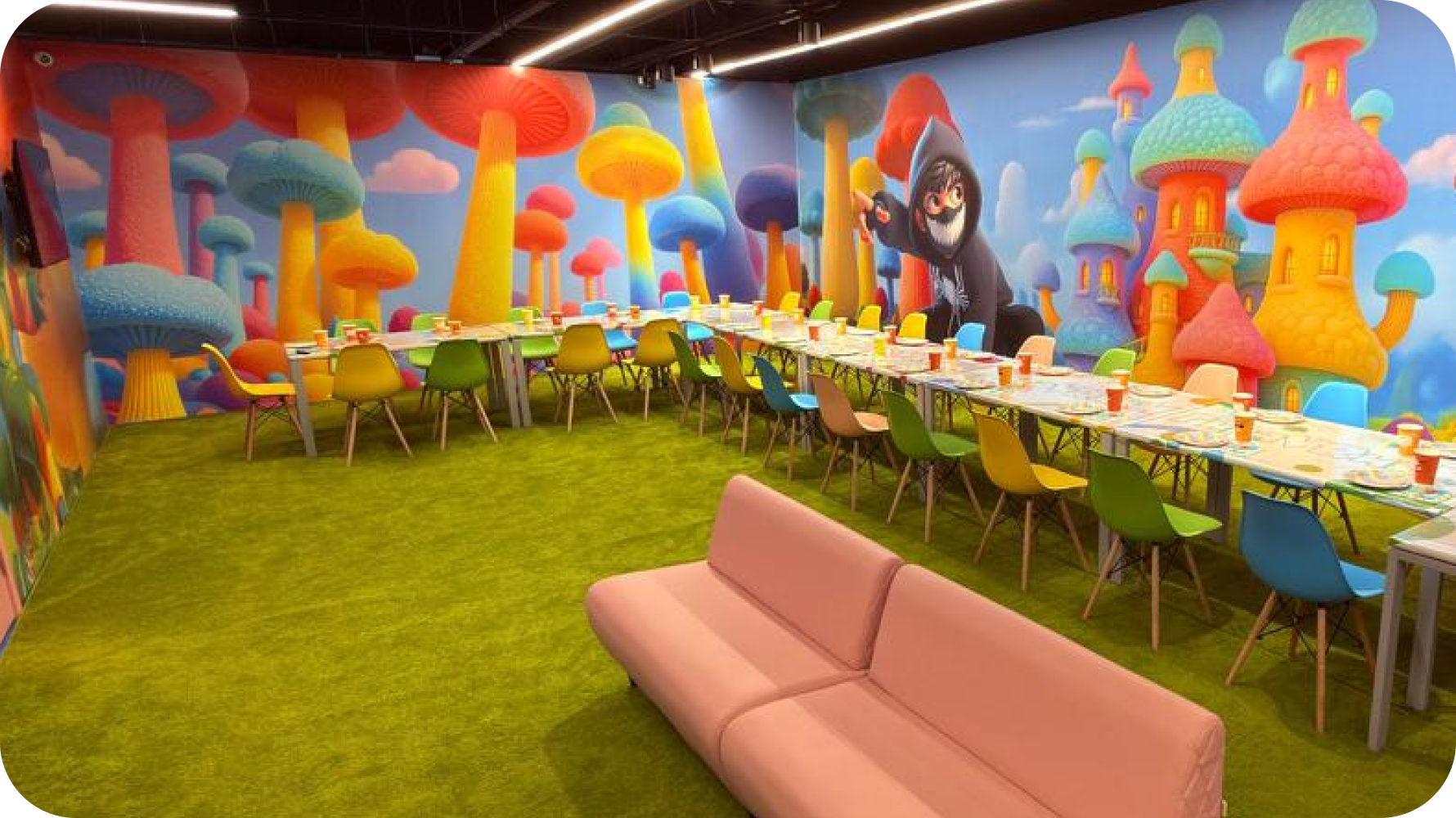
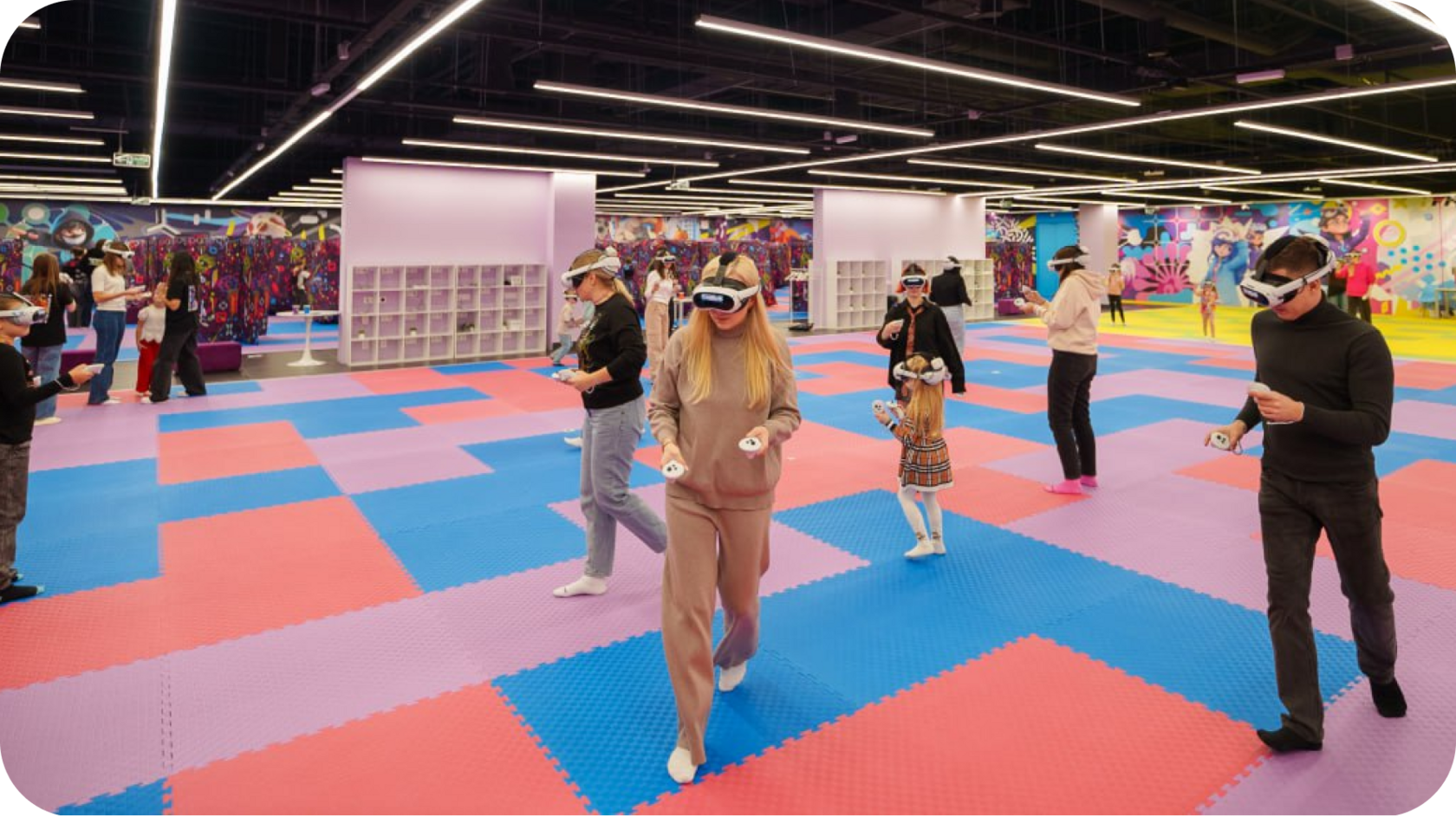
We broke the global trend of "VR is for hardcore gamers" for a reason. We believed from day one that virtual reality is for everyone. Our spaces prove it. They're bright, friendly, Instagrammable. A 45-year-old dad feels comfortable walking in. A 7-year-old girl feels excited. A teenager wants to take photos for their stories.
Think about it. A family celebration is a special day. People plan for it. They save for it. They're happy to spend because they're investing in memories. Now think about adult gamers. No special occasion, no natural reason to come together. They hesitate, compare prices, and you have to work twice as hard to convince them.
Which customer would you rather have?
The family wins every single time. More people, bigger groups, happier to pay, and they come back for every birthday, every holiday, every "let's do something fun" moment.
If you focus only on the "brutal" crowd, you cap your own growth. And if you're not in a tourist location with endless new faces walking through the door? You're in trouble.
Know your target audience. And focusing only on hardcore gamers is almost always the wrong answer.
A partner buys our virtual reality games franchise. They've got access to our massive library of games for all ages. And then they decorate their space like it's a bunker for hardcore gamers. Dark walls. Rusty metal. Post-apocalyptic vibes.
It's no surprise that families take one look and keep walking. When your space looks dark and scary, families don't even bother checking if you have games for them. They just walk past.
But here's the truth: you're literally shooting yourself in the foot and scaring away your most valuable customers. If you want to make real money in this business, you need families. You need birthday parties. You need parents looking for somewhere special to take their kids.
Yes, BATTLE START makes horror games and shooters too. We've got zombies, monsters, adrenaline-pumping missions. But that's just one slice of the pie.
We broke the global trend of "VR is for hardcore gamers" for a reason. We believed from day one that virtual reality is for everyone. Our spaces prove it. They're bright, friendly, Instagrammable. A 45-year-old dad feels comfortable walking in. A 7-year-old girl feels excited. A teenager wants to take photos for their stories.
Think about it. A family celebration is a special day. People plan for it. They save for it. They're happy to spend because they're investing in memories. Now think about adult gamers. No special occasion, no natural reason to come together. They hesitate, compare prices, and you have to work twice as hard to convince them.
Which customer would you rather have?
The family wins every single time. More people, bigger groups, happier to pay, and they come back for every birthday, every holiday, every "let's do something fun" moment.
If you focus only on the "brutal" crowd, you cap your own growth. And if you're not in a tourist location with endless new faces walking through the door? You're in trouble.
Know your target audience. And focusing only on hardcore gamers is almost always the wrong answer.
Mistake #3: Mixing Alcohol With Family Entertainment
This one is sensitive because it varies by country and culture. But let's be clear: if you position yourself as a family venue, alcohol creates a massive problem.
Some franchise owners look at VR and think "oh, this is like darts or pool, let's add a bar." They imagine adults drinking and playing.
Here's what actually happens:
First, you might run into legal trouble. In many places, mixing VR attractions with alcohol isn't allowed, especially when kids are around.
Second, and more importantly — drunk people and free-roam VR games do not mix. Loss of coordination. Poor judgment. Higher risk of injury. If someone gets hurt because they were drinking before playing, that's on you.
And third? Families notice. Parents don't want to bring their kids to a place that feels like a bar. They want somewhere safe, somewhere welcoming.
Some franchise owners look at VR and think "oh, this is like darts or pool, let's add a bar." They imagine adults drinking and playing.
Here's what actually happens:
First, you might run into legal trouble. In many places, mixing VR attractions with alcohol isn't allowed, especially when kids are around.
Second, and more importantly — drunk people and free-roam VR games do not mix. Loss of coordination. Poor judgment. Higher risk of injury. If someone gets hurt because they were drinking before playing, that's on you.
And third? Families notice. Parents don't want to bring their kids to a place that feels like a bar. They want somewhere safe, somewhere welcoming.
Mistake #4: Letting Kids Play Scary Games
This one should be obvious, but here we are.
A 6-year-old begs to play the zombie game. The parents say "oh, she'll be fine." You let her in. Ten minutes later, she's screaming, crying, panicking. She runs somewhere, maybe trips, maybe crashes into something.
Guess who gets blamed? You.
Not the parents who insisted. Not the kid who begged. You. Because you're a professional. You're supposed to know better.
BATTLE START puts age ratings on every game for a reason. They're not suggestions. They're not flexible. They're the result of years of testing and understanding what different age groups can handle.
Even in mixed groups, even when everyone pressures you — hold the line. Offer an alternative from our massive library. There's always something else to play. Protect your reputation as a safe, responsible place. One bad incident can undo months of good reviews.
A 6-year-old begs to play the zombie game. The parents say "oh, she'll be fine." You let her in. Ten minutes later, she's screaming, crying, panicking. She runs somewhere, maybe trips, maybe crashes into something.
Guess who gets blamed? You.
Not the parents who insisted. Not the kid who begged. You. Because you're a professional. You're supposed to know better.
BATTLE START puts age ratings on every game for a reason. They're not suggestions. They're not flexible. They're the result of years of testing and understanding what different age groups can handle.
Even in mixed groups, even when everyone pressures you — hold the line. Offer an alternative from our massive library. There's always something else to play. Protect your reputation as a safe, responsible place. One bad incident can undo months of good reviews.
Mistake #5: Delegating Too Soon
Here's a dangerous myth: "I bought a VR franchise, so now the business runs itself."
No. Just no.
You need to understand how everything works. The booking system, the games, the customer flow, the common questions, the troubleshooting. You need to feel the energy of your space. You need to see with fresh eyes when something starts looking tired or when service quality slips.
Your staff will never care about your business as much as you do. That's not an insult to them — it's just reality. It's your dream, your investment, your future. You have to live and breathe it until it's strong enough to stand on its own.
Plan for at least the first year or two with you fully engaged. After that, if you've built the right team and trained the right manager, you can start stepping back. But even then, stay connected. Stay present. Keep pushing.
No. Just no.
You need to understand how everything works. The booking system, the games, the customer flow, the common questions, the troubleshooting. You need to feel the energy of your space. You need to see with fresh eyes when something starts looking tired or when service quality slips.
Your staff will never care about your business as much as you do. That's not an insult to them — it's just reality. It's your dream, your investment, your future. You have to live and breathe it until it's strong enough to stand on its own.
Plan for at least the first year or two with you fully engaged. After that, if you've built the right team and trained the right manager, you can start stepping back. But even then, stay connected. Stay present. Keep pushing.
Mistake #6: Skimping on What Actually Matters
What's the one thing new VR business owners try to save money on and immediately regret?
The interior. Every single time.
You are selling an experience that starts from the first second. Your space has to be more interesting, more beautiful, more exciting than your customers' homes. Because if it's not, why should they leave their couch?
You're not just competing with other VR places. You're competing with restaurants, movie theaters, trampoline parks, birthday party venues. You have to win on both the activity AND the atmosphere.
Think about what people actually do. They take photos and videos. They post on social media. They tell their friends "you have to see this place." If your space isn't photogenic, if it doesn't spark joy, you're losing free marketing every single day.
Different countries have different traditions. Maybe in your culture, people celebrate birthdays at pizza places. Maybe they do parties at cinemas. Maybe they rent outdoor spaces. Figure out what's normal in your city, and then find a way to do it better.
But the interior isn't the only place where owners try to cut corners.
Saving on staff. If you hire just one person, you'll quickly run into problems. Who works when they're sick? Who covers weekends? Who manages the rush hours? Even with a small venue, you need reliable coverage. If you can't afford a full team yet, then you step in. You work the desk. You manage the bookings. You clean the VR headsets. Your business needs you, especially in the beginning.
Saving on motivation. Your staff will never care about your business as much as you do. That's not their job. Their job is to do their work well. Your job is to give them a reason to care. Motivate them. Train them. Treat them right. We recommend reading "Customers for Life" by Carl Sewell and Paul B. Brown. It's the playbook for turning one-time visitors into lifetime customers.
One more thing: if your venue creates moments people want to show off, they'll keep coming back. Don't skimp on the stuff that makes people say "wow."
The interior. Every single time.
You are selling an experience that starts from the first second. Your space has to be more interesting, more beautiful, more exciting than your customers' homes. Because if it's not, why should they leave their couch?
You're not just competing with other VR places. You're competing with restaurants, movie theaters, trampoline parks, birthday party venues. You have to win on both the activity AND the atmosphere.
Think about what people actually do. They take photos and videos. They post on social media. They tell their friends "you have to see this place." If your space isn't photogenic, if it doesn't spark joy, you're losing free marketing every single day.
Different countries have different traditions. Maybe in your culture, people celebrate birthdays at pizza places. Maybe they do parties at cinemas. Maybe they rent outdoor spaces. Figure out what's normal in your city, and then find a way to do it better.
But the interior isn't the only place where owners try to cut corners.
Saving on staff. If you hire just one person, you'll quickly run into problems. Who works when they're sick? Who covers weekends? Who manages the rush hours? Even with a small venue, you need reliable coverage. If you can't afford a full team yet, then you step in. You work the desk. You manage the bookings. You clean the VR headsets. Your business needs you, especially in the beginning.
Saving on motivation. Your staff will never care about your business as much as you do. That's not their job. Their job is to do their work well. Your job is to give them a reason to care. Motivate them. Train them. Treat them right. We recommend reading "Customers for Life" by Carl Sewell and Paul B. Brown. It's the playbook for turning one-time visitors into lifetime customers.
One more thing: if your venue creates moments people want to show off, they'll keep coming back. Don't skimp on the stuff that makes people say "wow."
Mistake #7: Ignoring Marketing Until Opening Day
"I'll start marketing once we're open."
This is like deciding to start dating after you're already married. It's backwards.
You should be telling your city about your VR business the moment you sign the lease. Maybe even earlier.
The smartest partners in our network start building buzz months in advance. They partner with local bloggers. They run early bird specials. They tease the opening on social media. They get people excited before the paint is even dry.
Why? Because when you open, you want to be busy immediately. You want momentum. You want people talking.
Minimum timeline? Start your serious marketing push at least one month before opening. But if you really want to crush it, start earlier. Build that audience. Create that demand. By the time your doors open, you should already have bookings lined up.
This is like deciding to start dating after you're already married. It's backwards.
You should be telling your city about your VR business the moment you sign the lease. Maybe even earlier.
The smartest partners in our network start building buzz months in advance. They partner with local bloggers. They run early bird specials. They tease the opening on social media. They get people excited before the paint is even dry.
Why? Because when you open, you want to be busy immediately. You want momentum. You want people talking.
Minimum timeline? Start your serious marketing push at least one month before opening. But if you really want to crush it, start earlier. Build that audience. Create that demand. By the time your doors open, you should already have bookings lined up.
Ready to Build Something Great?
Building a successful VR business isn't magic. It's not luck. It's avoiding the obvious mistakes that trip up so many well-meaning entrepreneurs.
We've seen partners around the world take these lessons and build incredible businesses. Venues that families love. Places that scale. Spaces that make money and memories.
The VR industry is still young. You have a chance to be the go-to destination in your city and create something special.
If you're thinking about starting a VR business, if you want to build something that lasts, reach out. Talk to our team. Ask the hard questions. We've guided partners in over 40 countries through launching successful VR franchise. We'd love to do the same for you.
We've seen partners around the world take these lessons and build incredible businesses. Venues that families love. Places that scale. Spaces that make money and memories.
The VR industry is still young. You have a chance to be the go-to destination in your city and create something special.
If you're thinking about starting a VR business, if you want to build something that lasts, reach out. Talk to our team. Ask the hard questions. We've guided partners in over 40 countries through launching successful VR franchise. We'd love to do the same for you.

